1. Capture
Glasses, phone apps, simulators, and media uploads provide authorized audio, video, image, and device-state events.
Veracity Integrity Vision is a consent-first testing platform that pairs smart glasses, media-quality checks, behavioral signal review, and human oversight for interviews, compliance, field documentation, and high-stakes conversations.
Veracity Integrity Vision is designed to help reviewers understand what was captured, whether the media is usable, how confidence changes over time, and what still needs human judgment. It turns smart-glasses capture and uploaded media into structured review sessions with consent, provenance, uncertainty, and validation records.

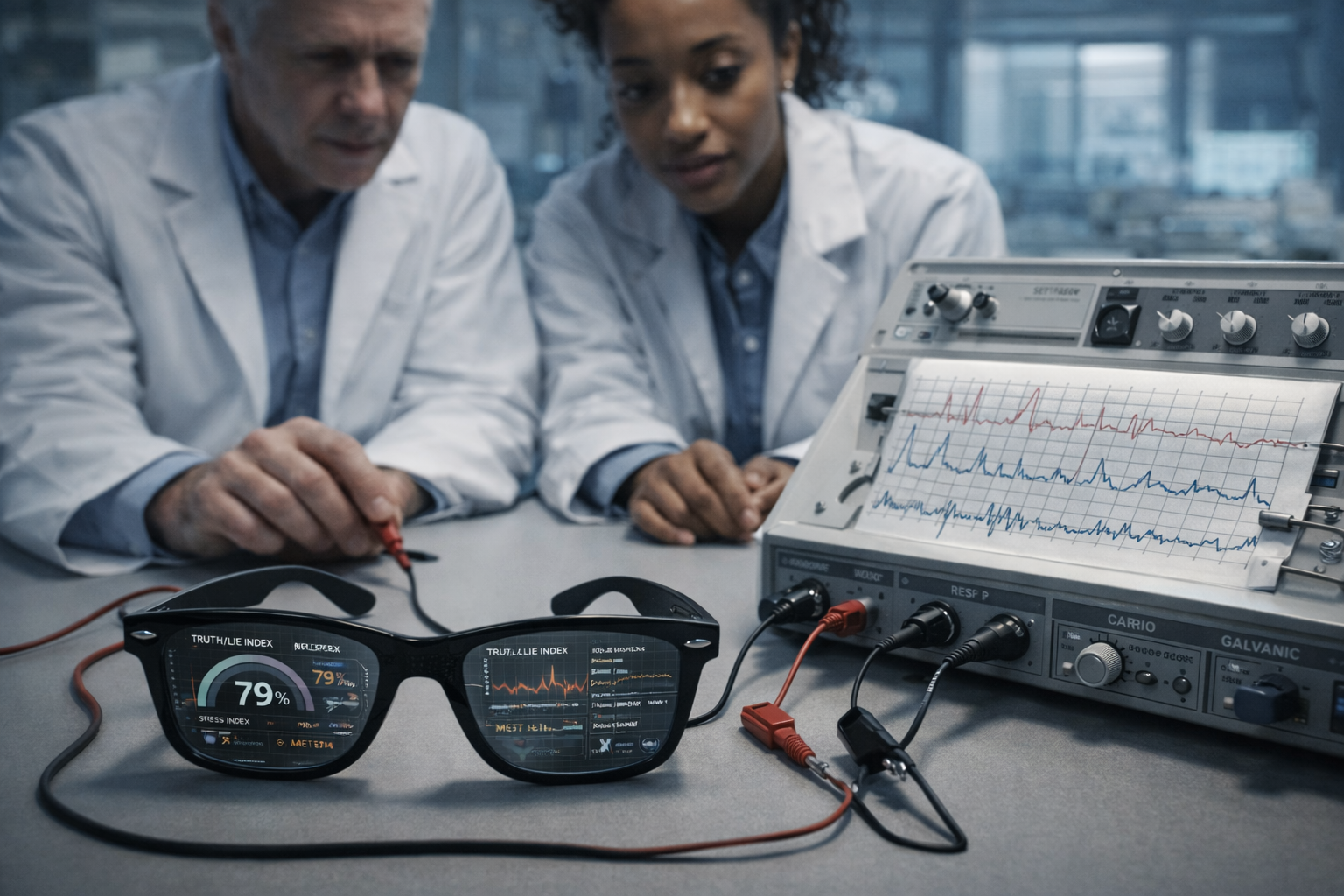
This is not being introduced as finished consumer hardware. The platform is in structured testing: the backend, adapters, media review workflow, research controls, and staging surfaces are being hardened before field sessions move into broader pilots.
Glasses, phone apps, simulators, and media uploads provide authorized audio, video, image, and device-state events.
Consent status and media quality are checked before any behavioral review or model adapter is allowed to proceed.
Research adapters and bias controls test whether a model generalizes beyond one dataset or shortcut.
The output is a documented review package, not an accusation: confidence, limits, provenance, and human next steps.
The glasses are the operator surface. The private backend is the analysis and audit layer. That separation keeps the wearable interface simple while giving the platform room for consent policy, storage controls, validation gates, and review exports.

Halo is the first intended hardware target because it combines display, camera, microphones, speaker output, Bluetooth, motion inputs, and a Lua-capable firmware environment. The testing goal is short, safe status prompts such as consent active, quality low, review ready, or human review required.
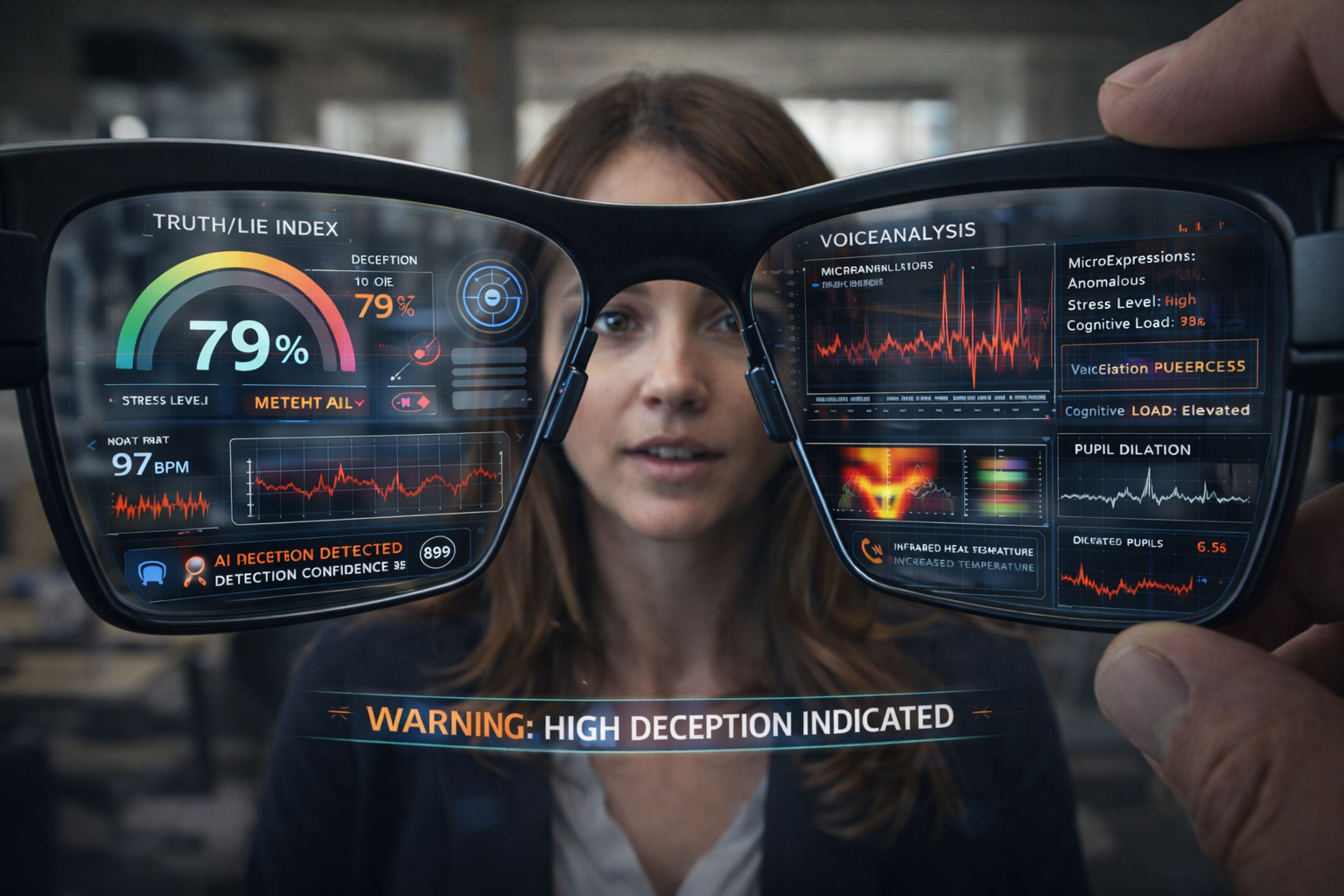
Expected future profiles include Brilliant Labs Frame, Brilliant Labs Monocle, Mentra Live, and other open smart-glasses platforms that expose lawful capture APIs, device-state reporting, secure controls, and consent-aware workflows.
The early promotional video shows the direction: a glasses-based interface that makes integrity review more immediate, more contextual, and more accountable. The current testing platform is turning that concept into a safer backend, adapter, and validation workflow.
The next phase is about disciplined proof, not hype. The goal is to prove that the software can capture the right context, preserve privacy, detect poor inputs, document uncertainty, and route sensitive results back to human review.
Run the API privately with authentication, rate limits, health checks, audit records, and rollback-tested deployment.
Connect signed Halo and Mentra capability reports, then expand simulator-backed tests into controlled device sessions.
Execute validation adapters for cross-domain behavior, multimodal fusion, and bias controls before non-mock outputs are trusted.
Invite selected testers and organizations to review workflows, outputs, limitations, and policy requirements.
Document consent, media quality, signal confidence, and review state during structured conversations.
Support sensitive internal reviews with provenance, limitations, and repeatable session records.
Analyze conversation quality, baseline shifts, stress indicators, and review-readiness without reducing people to a single score.
Veracity Integrity Vision is moving through private testing with an emphasis on safety, consent, media quality, and human review. Early testers, technical partners, and organizations can request pilot access or review the current prototype direction.
Veracity Integrity Vision is a decision-support and review platform. It is not a standalone lie detector, medical device, legal verdict engine, or replacement for trained human judgment.